Industry Insights
Peristaltic Pump Lubricants
Published on
15 September 2026
Which Type Does Your Pump Need?
Shoe, roller, silicone lubricant or silicone grease. Choosing the right Enviroflex product helps protect your hose, reduce friction and avoid unnecessary downtime.
If you run an industrial peristaltic hose pump, the casing is not empty. It contains lubricant, and that lubricant has an important job every time the pump turns.
As the rotor moves, a shoe or set of rollers compresses the hose against the pump casing to push the media forward. That compression creates friction and heat at the outside of the hose. Correct lubrication helps reduce that friction, transfer heat away from the compression zone and protect the hose, which is usually one of the most important consumable parts in the pump.
This guide explains the difference between Enviroflex Shoe Lubricant, Roller Lubricant, Silicone Lubricant and Silicone Grease, and when each one should be used.
Quick answer: which Enviroflex lubricant do I need?
| Pump or application | Use | Why |
|---|---|---|
| Shoe-type peristaltic hose pump | Enviroflex Shoe Lubricant | Formulated for the higher sliding contact and heat generated by fixed shoe pumps. |
| Roller-type peristaltic hose pump | Enviroflex Roller Lubricant | Formulated to flow around moving rollers and support even lubrication. |
| Duties where a glycerine-based lubricant is not suitable | Enviroflex Silicone Lubricant | Used where chemical compatibility or operating temperature makes a silicone product more appropriate. |
| Assembly and servicing of seals, O-rings and threaded fittings | Enviroflex Silicone Grease | Used on mechanical parts during servicing, not a replacement for casing lubricant. |
If you are not sure which pump type you have, check the pump manual or send us the pump make and model before ordering.
Why peristaltic hose pumps need lubricant
A peristaltic hose pump works by squeezing a hose closed and moving that point of compression along the hose. In a shoe pump, fixed shoes press the hose against the casing. In a roller pump, rollers apply the compression as they rotate.
In both designs, there is repeated contact between the moving compression element and the outside of the hose. That contact generates friction and heat. If the wrong lubricant is used, or if the lubricant is not compatible with the hose or application, hose wear can accelerate.
The lubricant in the casing performs three main jobs:
- It reduces friction between the shoe or rollers and the hose.
- It helps transfer heat away from the compression point.
- It supports smoother pump operation and correct hose protection.
Hose life is also affected by pump speed, pressure, hose material, pumped media, temperature, suction conditions and maintenance practice. Lubricant is one of the main controllable factors, but it is not the only one. Lower pressure tube pumps that run a dry tube against rollers are a different case and are not covered here.
How the right lubricant helps protect hose life
A correctly specified peristaltic pump lubricant protects the hose in three connected ways.
First, it reduces drag at the compression point. Less drag means less mechanical stress on the outside of the hose during each revolution.
Second, it helps manage heat. Excess heat accelerates rubber fatigue and compound ageing, which can shorten hose life. The right casing lubricant helps transfer heat away from the hose and into the pump casing.
Third, it must be compatible with the hose and the application. A lubricant that looks acceptable on day one can still cause problems if it is not suitable for the hose compound, the operating temperature or the pumped media in the event of hose failure.
This is where a non-approved or poorly matched substitute can become expensive. Any saving on the lubricant can quickly be lost through premature hose replacement, unplanned downtime or process risk.
Correct lubricant selection also helps avoid premature hose changes, reducing downtime and unnecessary consumable waste.
Food grade H1 lubricant for food and beverage applications
In food, beverage and audited hygiene applications, lubricant selection is not only a maintenance decision. It can also be an audit and product safety issue.
If a hose fails in service, the pumped media and casing lubricant may come into contact. In applications where incidental food contact is possible, the lubricant should have suitable registration and documentation.
Enviroflex Roller Lubricant is H1 registered by 2Probity under FI0928101, and Enviroflex Shoe Lubricant is H1 registered by 2Probity under FI0928102.
These registrations support incidental food-contact use when the products are used according to manufacturer instructions, where there is potential exposure up to 10 ppm.
H1 registration does not mean the lubricant is a food ingredient or suitable for deliberate direct contact with product. It means the product has been registered for incidental food-contact applications within the conditions stated on the certificate.
For food, beverage, potable or pharmaceutical related duties, always confirm the product certificate, site requirements and relevant approval documents before use. A cheaper unregistered substitute may not provide the same audit trail, certificate or formulation assurance.
Enviroflex Shoe Lubricant
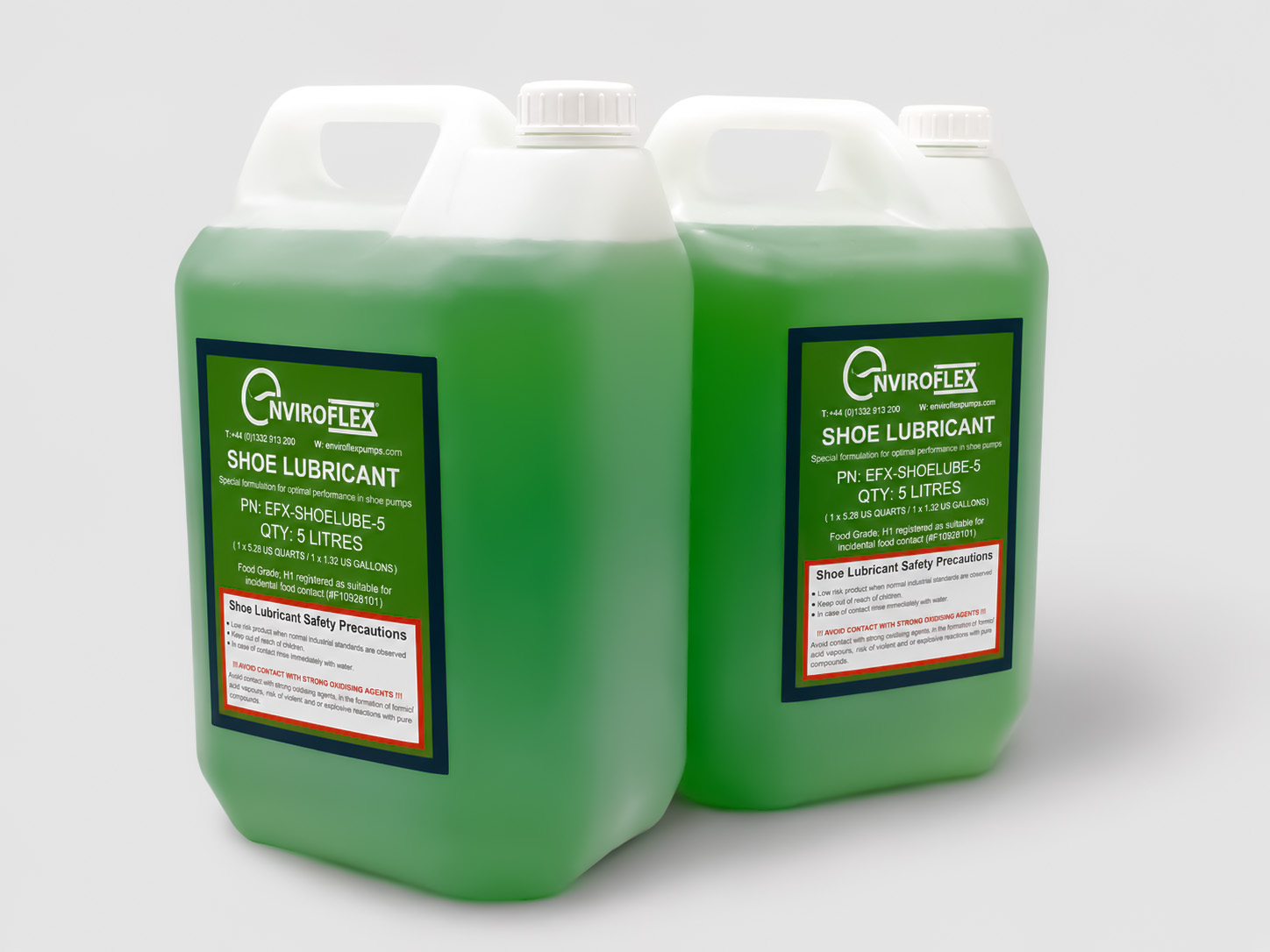
Use Enviroflex Shoe Lubricant in shoe-type peristaltic hose pumps.
Shoe pumps generate higher sliding contact between the fixed shoe and the hose. The lubricant must stay at the contact point, reduce friction and support heat transfer during operation. It is a thicker grade that clings to the hose and stays at the contact point, since the shoe itself does not move.
Enviroflex Shoe Lubricant is H1 registered by 2Probity for incidental food-contact applications under FI0928102.
Do not substitute roller lubricant unless Enviroflex or the pump manufacturer confirms it is suitable for the pump and duty.
Enviroflex Roller Lubricant
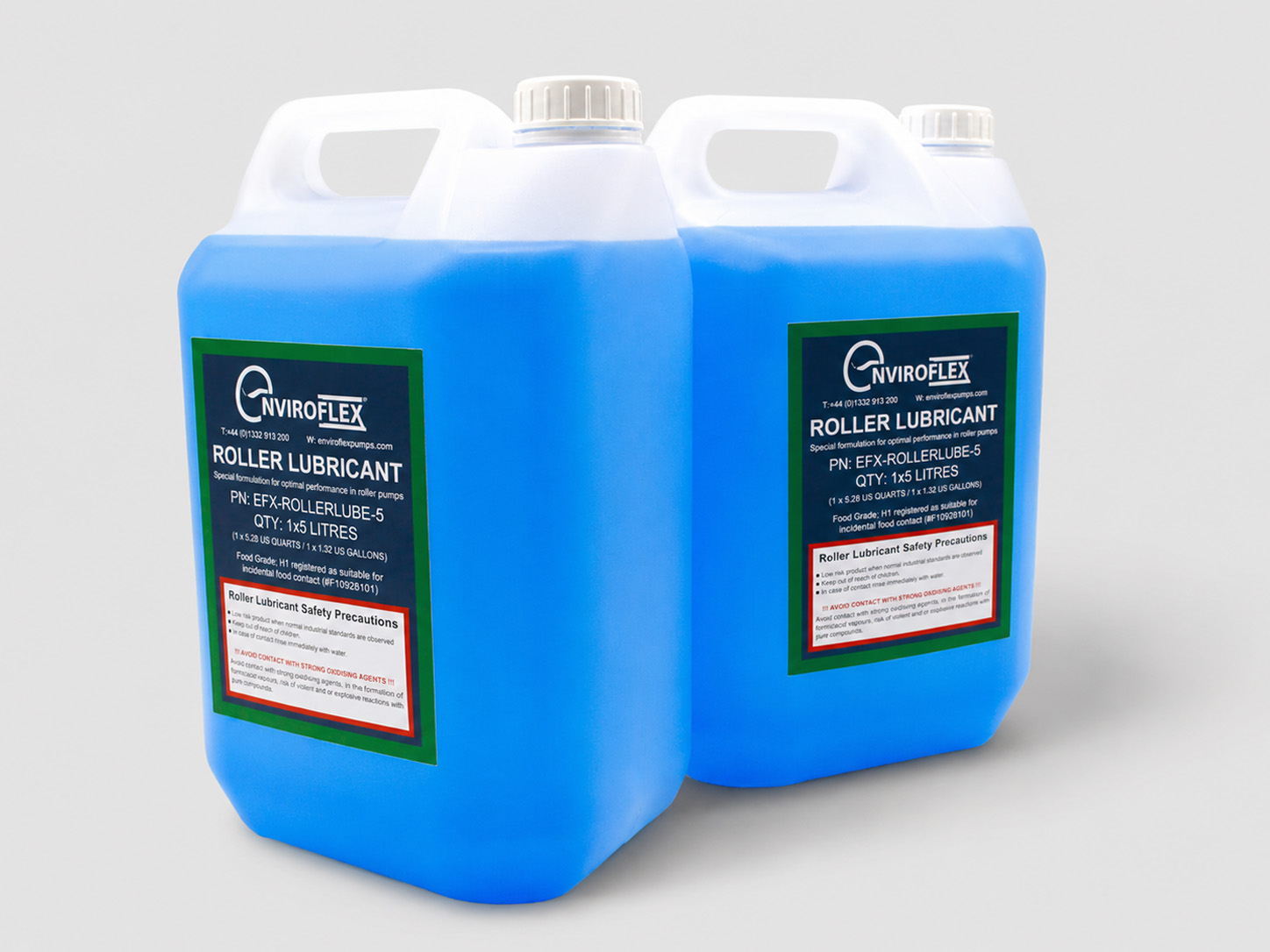
Use Enviroflex Roller Lubricant in roller-type peristaltic hose pumps.
Roller pumps need a lubricant that can flow around the moving rollers and the areas they contact. A roller lubricant is usually a thinner grade than a shoe lubricant, because the mechanical contact and movement pattern are different.
Enviroflex Roller Lubricant is H1 registered by 2Probity for incidental food-contact applications under FI0928101.
Using shoe lubricant in a roller pump, or roller lubricant in a shoe pump, may reduce the level of protection the pump was designed to receive.
Enviroflex Silicone Lubricant
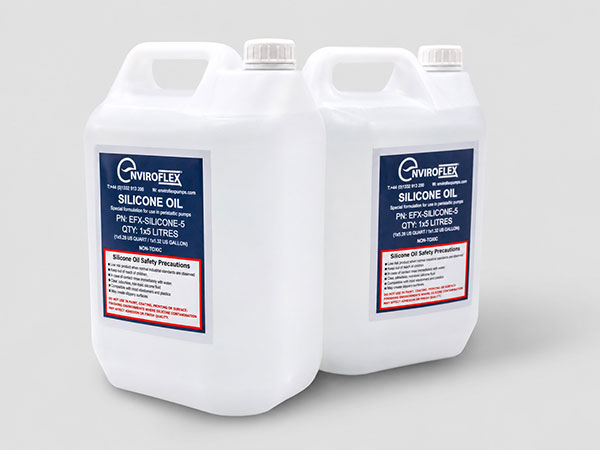
Use Enviroflex Silicone Lubricant where a glycerine-based casing lubricant is not suitable for the duty.
This may include applications where the pumped media could react with glycerine in the event of hose failure, such as some strong oxidisers, peroxides or nitric acid duties. It may also apply where the operating temperature is outside the stated range for the glycerine-based lubricant.
Chemical compatibility depends on the media, concentration, temperature, hose material and operating conditions, so always confirm suitability before use.
Enviroflex Silicone Lubricant is intended for industrial chemical and higher temperature duties where it is the appropriate product. It does not carry the food grade H1 registration, so it should not be presented as a food grade lubricant.
Enviroflex Silicone Grease
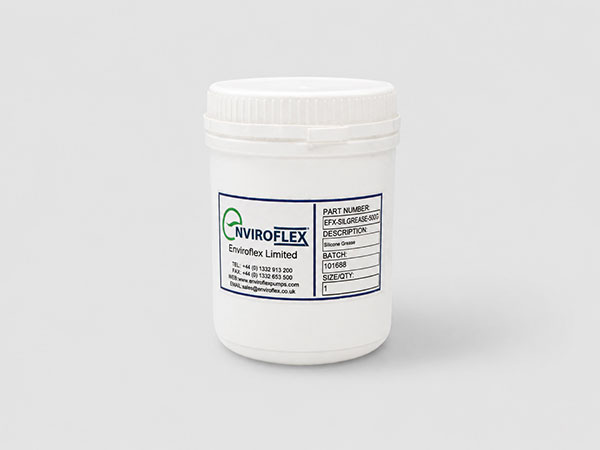
Use Enviroflex Silicone Grease for assembly and servicing tasks, not as the main casing lubricant.
It can be used on suitable O-rings, seals and threaded fittings to aid assembly and help protect components from moisture. It should not be used inside the pump casing in place of shoe, roller or silicone casing lubricant.
Always confirm elastomer compatibility before applying silicone grease. Avoid use on silicone rubber seals unless compatibility has been confirmed.
Before choosing a lubricant, check these details
To confirm the correct Enviroflex lubricant, identify:
- pump make and model
- shoe or roller design
- hose material
- pumped media
- operating temperature
- pressure and duty cycle
- whether food grade H1 registration is required
- any chemical compatibility concerns
- current lubricant type and fill volume
If you are unsure, do not guess. The wrong lubricant can increase friction, raise operating temperature and shorten hose life.
Questions and Answers
Some questions are answered here but if you have more specific questions please don’t hesitate to get in touch
Contact an ExpertCan I Use Shoe Lubricant in a Roller Pump?
Not unless Enviroflex or the pump manufacturer confirms it is suitable. Shoe and roller lubricants are formulated for different contact patterns, and using the wrong one may reduce the protection the pump was designed to receive.
Are Enviroflex Lubricants Food Grade?
Enviroflex Shoe Lubricant and Roller Lubricant are H1 registered by 2Probity for incidental food-contact applications. Silicone Lubricant and Silicone Grease do not carry the H1 registration.
What Does H1 Food Grade Mean?
H1 is a category for lubricants registered for incidental food contact in and around food processing areas, within the conditions stated on the certificate. It does not mean the lubricant is a food ingredient or suitable for deliberate direct contact with product.
When Should I Use Silicone Lubricant Instead of Glycerine Lubricant?
Use silicone lubricant where the pumped media could react with glycerine in the event of hose failure, or where the operating temperature is outside the stated range for the glycerine-based product. Confirm chemical compatibility before use.
Can Silicone Grease Be Used Inside the Pump Casing?
No. Silicone grease is for assembly and servicing of seals, O-rings and fittings. It is not a casing lubricant and should not replace shoe, roller or silicone casing lubricant.
What Information Do I Need to Choose the Right Lubricant?
Pump make and model, shoe or roller design, hose material, pumped media, operating temperature, duty cycle and whether food grade H1 registration is required.
Need help selecting the right Enviroflex lubricant?
Send us your pump make and model, hose material, pumped media and operating conditions, and tell us whether food grade H1 registration is required. We will confirm the correct lubricant for your pump and provide the relevant product information, SDS, TDS and H1 certificate where applicable.
Correct lubricant selection is a small part of pump maintenance, but it has a clear effect on hose protection, reliability and running cost.
Contact us